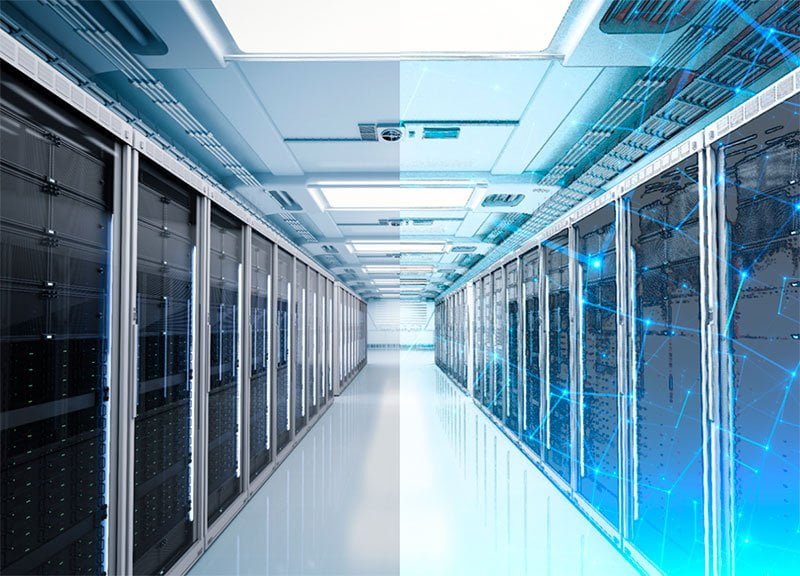
Esri, the global GIS and location-intelligence software company behind ArcGIS, is expanding its capabilities in the fast-growing data center market through the acquisition of digital twin software specialist Profiline-Tech.
Profiline-Tech is now part of Esri, and prospective customers are directed to Esri for additional information. The company is a provider of digital twin technology specifically designed for data center environments.
The transaction extends Esri's existing data center offering from geospatial planning, site selection, engineering and infrastructure visualization deeper into the real-time operation and optimization of the data center itself.
Esri already has a significant technology footprint around the data center lifecycle. Its current data center offering uses ArcGIS to support strategic expansion planning, site selection, fiber and network analysis, environmental and infrastructure risk assessment, engineering and construction, and operational security. ArcGIS GeoBIM also connects building information models with geospatial information during data center design and expansion projects.
The company has increasingly positioned digital twins as an important extension of this architecture. Esri defines a geospatial digital twin as a virtual representation of physical assets, processes and relationships that can integrate business systems, sensors and information models, monitor changing conditions and support simulation of future scenarios.
Profiline-Tech brings a more specialized data-center operational layer to that proposition.
Profiline-Tech's technology creates continuously updated digital representations of data center operations by combining real-time IoT data with virtual simulation. The system is designed around bidirectional synchronization: operational data flows from physical equipment into the digital twin, while insights and optimized decisions generated in the virtual environment can be sent back toward physical assets and operational systems.
Profiline-Tech describes four core areas of capability: data infrastructure and engineering, bidirectional physical-to-digital synchronization, data analytics, and real-time visualization and simulation. Its stated objective goes beyond monitoring a facility, using predictive simulation and closed-loop data flows to continuously test and optimize how the data center operates.
The strategic fit is notable.
Esri's strength has traditionally been in understanding \\where assets are, how they relate spatially, and how external conditions affect them\\. ArcGIS can combine infrastructure, buildings, terrain, utilities, environmental conditions and operational information into a common geospatial environment.
Profiline-Tech takes that model further inside the facility, incorporating operational equipment data and simulation into a continuously updated representation of the data center.
The combination can therefore connect several layers that are often managed separately: the geographic location of a data center, its surrounding power and network infrastructure, the BIM representation of the facility, individual internal assets and equipment, real-time sensor data, and predictive models of facility performance.
That direction is consistent with Esri's broader view that a true digital twin is more than a static 3D model. The company describes mature digital twins as systems that integrate data, change over time and allow organizations to analyze and simulate operational outcomes.
The timing also aligns with Esri's growing attention to the data center sector.
The company has been actively promoting ArcGIS for data center development, highlighting the ability to analyze available land, fiber connectivity, utilities, workforce, environmental constraints and other factors that determine whether a proposed site is viable. Its technology is also being used to construct 3D digital twins that let developers evaluate alternative layouts and infrastructure decisions before construction.
That gives Esri a broader position across the data center lifecycle—from planning and construction through operations.