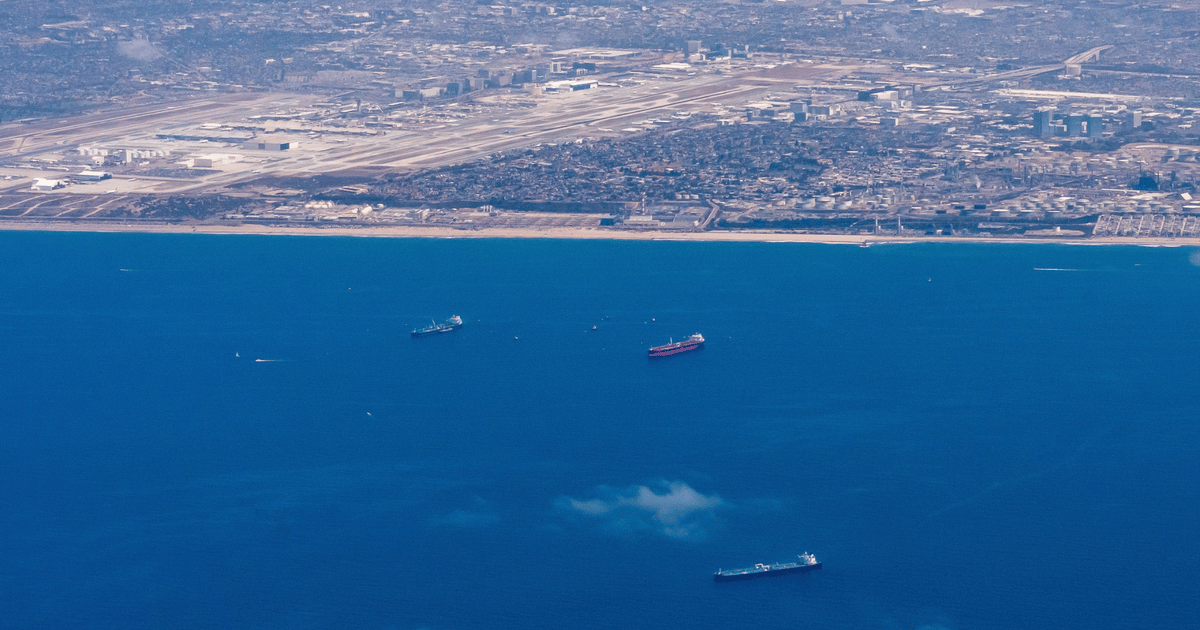
Digital Realty is planning to build a cable landing station (CLS) inside its LAX12 data center in El Segundo, California, adding a new on-ramp for subsea capacity into the Los Angeles metro area. The company announced the project on September 22 in partnership with Assured Communications, a specialist in subsea infrastructure design and delivery. The CLS is aimed at routes between Asia-Pacific and North America and is expected to begin supporting cables in 2028.
A cable landing station is where a subsea cable terminates on land and connects to terrestrial networks. Increasingly, hyperscale cloud and AI providers are bringing cables directly to specific data centers rather than terminating them at standalone landing stations. Assured is also a strategic partner to the landing operator for AWS's Sta'O'Nuk cable.
"Digital Realty sees cable landing infrastructure as an increasingly important part of the broader connectivity ecosystem," said Craig Waldrop, vice president of strategy and business development at Digital Realty, in comments reported by Data Center Knowledge. "Subsea cables provide international capacity, but that capacity is most valuable when it can connect efficiently into the data centers, networks, cloud providers, and customers that need it."
The planned CLS is designed to provide subsea cable operators with a turnkey solution for landing and powering their systems, with Assured supporting the design, engineering, and construction. "LAX12 represents Digital Realty's first turnkey cable landing solution and marks an important evolution in the company's broader interconnection platform," Waldrop said. The project is currently in development.
Waldrop noted that in El Segundo specifically, the proximity of the beach landing to Digital Realty's existing infrastructure provides a more direct path from subsea systems into terrestrial networks, running through the company's carrier-neutral model. "The value of a carrier-neutral model is that it gives cable operators a common landing environment that is not tied to a single network or cloud provider," he said.
AI is one driver of the demand behind the project, but not the only one. "AI is contributing to demand for high-capacity and resilient connectivity, but this extends beyond any single workload," Waldrop said. "Cloud adoption, content delivery, network expansion, and broader digital infrastructure growth are all driving continued investment in subsea connectivity."